





How much does an SEO audit cost?
Most professionally delivered SEO audits cost between $500 and $7,500. Below $500 you are almost always paying for an automated scan. Above $10,000 you are paying for enterprise scope — hundreds of thousands of URLs, JavaScript rendering, server log analysis, and interviews with the people who own the codebase.
That is the honest band, and no published source agrees on it. The disagreement is the first useful finding: an SEO audit is an undefined unit of technical work with a price attached.
Figures on this page are in US dollars, because that is what the sources publish. We are a Montreal SEO agency and quote in Canadian dollars.
| Source | Published SEO audit cost | What the number describes |
|---|---|---|
| WebFX survey data | $101 – $750 for 43% of businesses | What respondents said they paid |
| WebFX’s own audit product | $8,600, up to 70 pages, 45 days | A packaged deliverable |
| Neil Patel / NP Digital | $500 – $7,500 worth paying for | A strategic audit with a roadmap |
| HatchTechs | $500 – $15,000 | Technical audit by provider type |
| Renaissance SEO’s reading | $500 – $7,500 for most sites | Priced per URL crawled and per hour of manual review |
Those two WebFX rows sit on the same page. The page headline says SEO audits cost $101 to $750. Further down, the same page prices its own audit at $8,600 for up to 70 pages reviewed over 45 days — roughly eleven times its own stated ceiling, for a site smaller than most.
Neither number is a lie. They measure different things. The survey measures what buyers paid for something they called an SEO audit. The $8,600 measures what a 750-person team charges to review 70 pages by hand. That gap — between what buyers pay and what the audit work costs — is the subject of this page.
Why the published SEO audit costs contradict each other
The ranges come from surveys of buyers, not from specifications of audit work.
WebFX’s table of SEO audit costs by business size makes the survey artifact visible:
| Business size | Published audit cost |
|---|---|
| Startup / micro-enterprise (1–10 employees) | $50 – $750 |
| Small business (11–50 employees) | $1 – $2,500 |
| Mid-sized business (51–250 employees) | $50 – $2,500 |
| Large business (251–500 employees) | $101 – $5,500 |
| Enterprise (501+ employees) | $501 – $4,000 |
A small business audit floor of $1. An enterprise audit ceiling of $4,000 sitting below the large-business ceiling of $5,500 — enterprises with 501+ employees and the most complex websites paying less to audit them than companies a fifth their size.
Those are not audit prices. They are the minimum and maximum values of a survey response set, published as a range. A buyer building an SEO budget from that table is reading noise.
HatchTechs prices by provider type instead — freelancers $500–$2,000, agencies $2,000–$7,000, enterprise firms $7,000–$15,000+. More useful, because provider type correlates with hours. It still prices the seller rather than the audit.
The only version of the question that produces a usable answer: what does the audit cover, in units?
The five variables that actually set the price
Every legitimate difference between a $500 audit and a $10,000 audit reduces to one of these five, and all five are verifiable before you pay.
1. Number of URLs crawled
The biggest cost driver, and the easiest to verify. A 40-page brochure site and a 120,000-URL ecommerce catalogue are not the same audit, and no honest provider prices them alike.
Crawler licence tiers make the ceiling concrete. Screaming Frog’s SEO Spider is free up to 500 URLs and costs $279 per year for unlimited crawling. Sitebulb Lite handles 10,000 URLs per audit, Sitebulb Pro 500,000. Semrush Site Audit crawls 20,000 pages per audit on its Pro toolkit and 100,000 pages per audit on Business.
Ask how many URLs the quoted audit covers. If the answer is “your whole site” with no number, the number is whatever the licence allows. Providers auditing large catalogues price by crawl scope for that reason — our ecommerce SEO work establishes how many URLs are actually indexable before anyone quotes.
2. Crawl depth and coverage
A crawl that stops at depth 3 never reaches your paginated category pages, your filtered product variants, or the orphan content sitting four clicks from the homepage. Depth is a configuration setting, and it is how a provider makes a 120,000-URL site look like a 4,000-URL site on the invoice.
Ask for the crawl configuration: depth limit, whether pagination and URL parameters were followed, whether the crawler was seeded from sitemap.xml as well as the homepage.
3. JavaScript rendering
The variable that most quietly separates SEO audit pricing tiers, and almost no provider publishes it.
If your site renders content client-side — a React storefront, a headless build, a single-page application — a crawler reading raw HTML sees an empty shell. The audit reports thin content and missing headings on pages that are fine, and misses the pages genuinely broken.
Rendering is a paid capability. In Semrush Site Audit, JavaScript rendering is available only on the Guru and Business toolkits, not on Pro. Whether your auditor can see your rendered pages depends on which subscription tier they bought that month. A $500 audit of a JavaScript site is frequently a $500 audit of a blank page.
Ask one question: did you crawl with JavaScript rendering enabled, and can you show me the rendered HTML for one of my product pages? This is standard scope in our technical SEO work, and it is the fastest way to find out whether a quote is serious.
4. Server log file analysis
Server logs show what Googlebot actually did — which URLs it requested, how often, which it ignored, how much crawl budget went to parameter junk. A crawler shows what Google could find. Logs show what Google did.
Almost no audit under $2,500 includes log file analysis, because it requires server access, a conversation with your hosting provider, and a separate tool. Screaming Frog’s Log File Analyser is free for 1,000 log events and $139 per year beyond that — 1,000 events is minutes of crawler activity on a mid-sized site.
Above a few thousand pages, with crawl budget a live problem, an SEO audit without log analysis answers the wrong question.
5. Manual review hours versus tool output
The four variables above are machine capacity. This one is the human review, and it is where the audit budget actually goes.
A crawler flags 4,300 issues on a 6,000-page site. Roughly forty matter. Deciding which forty, ranking them by the organic traffic and revenue attached to the affected URLs, and writing fixes a developer can implement without a follow-up call — that is the audit. It takes an experienced auditor between 8 and 60 hours depending on site size, and it is the only line item that scales with quality rather than licence tier.
A rule that holds up: subtract a few hundred dollars of tool cost from the quote, divide the rest by prevailing rates for senior technical review, and you have the human hours you are buying. A $500 audit buys three to five. Decide whether that is enough to understand your site.
What a complete SEO audit includes
Five audits travel under one name, and the price depends on how many you are buying.
| Component | What it examines | Typically included above |
|---|---|---|
| Technical audit | Crawl errors, broken links, redirect chains, canonicalization, robots.txt, sitemap.xml, index coverage, page speed, Core Web Vitals, mobile usability, structured data | $500 |
| On-page audit | Title tags, meta descriptions, H1s, internal linking, keyword targeting, thin content, cannibalization, search intent match | $1,000 |
| Content audit | Page-level performance, pages stuck on page two, merge / rewrite / delete decisions, keyword gaps against competitors | $2,500 |
| Link audit | Backlink profile quality, toxic links, anchor text distribution, competitor link gaps | $2,500 |
| Competitive audit | Scorecard against three to five competitors, share of the SERP, content depth comparison | $2,500 |
The technical audit is the baseline every provider includes, which is why “technical SEO audit” and “SEO audit” get used interchangeably in quotes, and why prices are impossible to compare. When a $600 audit and a $6,000 audit both say “SEO audit,” one means the first row of that table.
Content and link work are separate disciplines, not report sections. A content audit that says “improve this page” without a target keyword, a competitive density figure and a heading structure is a to-do list. Real SEO content work starts where a content audit ends, and the same is true of link building after a link audit surfaces the gaps.
How to tell a real audit from a tool export

Neil Patel names it plainly: many audits are “just exports from paid SEO tools with a logo slapped on.” He is right, and inside a PDF a tool export and a real audit look identical. Four tests separate them, all runnable before you pay.
Test 1 — crawl your own site first. Run any free crawler tier on your 500 most important URLs and save the output. When the paid audit arrives, diff it against yours. Same findings in a nicer font means you paid for formatting.
Test 2 — count the URLs in the recommendations. A tool export says “17 pages have duplicate title tags.” An audit says “these 17 pages have duplicate title tags, 14 are paginated category pages needing canonicalization, and these 3 are costing you organic traffic.” Specific URLs are the signature of a human having looked.
Test 3 — check the ordering. Crawlers rank issues by severity score. Auditors rank by business impact. If the first recommendation is a sitewide fix on pages with no search traffic, nobody prioritized anything.
Test 4 — look for a finding no crawler can produce. A cannibalization judgment, a search intent mismatch, a page ranking position 6 that should be split in two, a competitor structured differently. If no finding in the audit required a human to open a browser, no human opened a browser.
Red flags in a quote: a price with no URL count, “comprehensive” with no component list, no named tools, no sample audit, no walkthrough call, recommendations phrased as categories rather than actions.
What you can check yourself before paying anyone
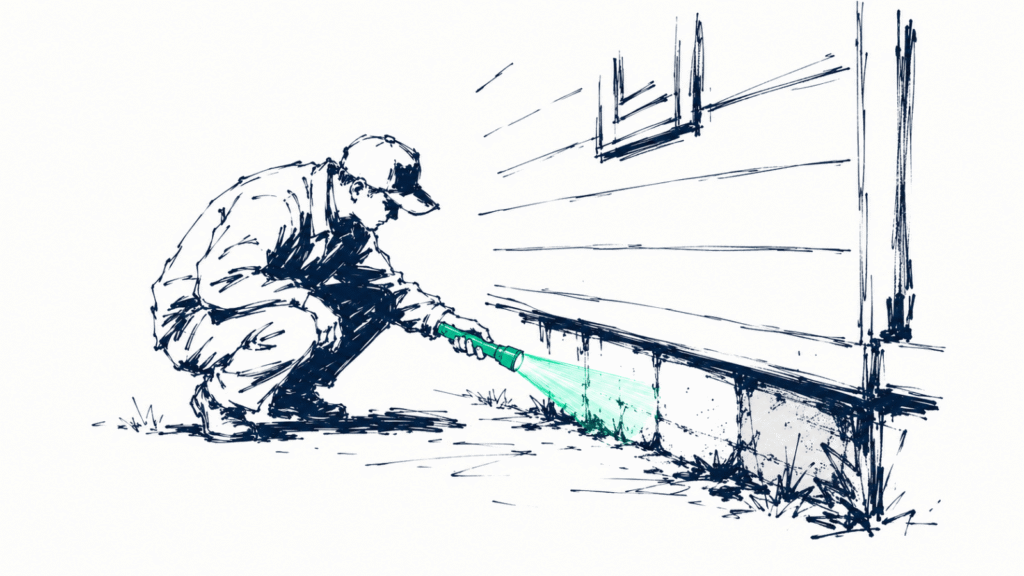
A free diagnostic pass costs you an afternoon and changes what you are able to ask for.
Google Search Console gives you four checks free: index coverage errors, queries driving impressions but no clicks, average position by page, and Core Web Vitals status. Crawl your top 500 URLs with a free crawler and you know your broken links, redirect chains, duplicate titles and orphan pages.
That is the $150 audit tier, done for nothing. What no free tool delivers is the judgment layer: which findings actually cost you organic traffic, and the order to fix them in.
That is why our free SEO audit is a real diagnostic rather than a form-gated tool export — it sets the measured baseline first, so any conversation about scope and price starts from the same numbers. For multi-location businesses the baseline differs again, because local SEO problems live in the map pack and profile data rather than the crawl.
Is an SEO audit worth the cost?
An audit is worth exactly what gets implemented from it, and nothing more.
Every published SEO audit pricing guide treats the report as the product. It is not. Audit reports are a diagnosis, and a diagnosis that never becomes execution has zero value regardless of the money paid.
The findings that repay their cost are the ones users feel: page speed, mobile usability, broken links pulled out of the checkout path. Fixing speed and mobile issues lifts user experience and conversion rates. Leaving them in reports lifts nothing.
The pattern repeats. A business buys a $3,000 SEO audit, receives 40 prioritized recommendations, implements the six easy ones, and the file goes quiet. Twelve months later it buys another audit, which surfaces the same 34 unimplemented technical issues, now aged.
What we measure on client accounts is that the rankings come from sustained execution, not from the document:
- A business that had been running SEO on its own reached 5.1k organic clicks and 158.2k impressions; the curve turned upward once implementation became continuous rather than periodic.
- A local marketing firm went from under 10 clicks a month to 300+ a day over 12 months — 16.7k clicks, 987k impressions.
- A local contractor moved from 5 clicks a week to roughly 80 a day: 7.21k clicks, 494k impressions, 1.5% CTR, average position 9.2.
- One account added 2.34k clicks and 64.5k impressions at 3.6% CTR and average position 6.9, moving from 8 to 90 clicks a day inside three months.
- Another accelerated from 5 to 40 clicks a day in three months: 2k clicks, up 1,253%, and 274.2k impressions, up 285%.
- A one-year-old account still holds 175.8k clicks — maintained rankings rather than a spike that collapses.
None of that came from a report. It came from ranking factors fixed in priority order, month after month, then remeasured. Organic search is a position held against competitors who are also optimizing, which is why we treat the diagnostic as the opening move of a campaign rather than a deliverable that closes a file. Our case studies show the same arc across industries, and our 90-day written guarantee exists because measured execution makes that timeline predictable.
We test on our own properties before touching a client site — one runs about 180 pages and roughly 6,000 organic clicks a month, bilingual, and it produced our 200-ranking-factor study.
How to read an SEO audit quote
Nine questions. The answers tell you the price is real.
- How many URLs will you crawl, and what is the depth limit?
- Will the crawl use JavaScript rendering?
- Does the scope include server log file analysis?
- Which of the five audit components are included — technical, on-page, content, link, competitive?
- Which tools are you using, and on which licence tier?
- How many hours of manual review are in this price?
- Will recommendations be tied to specific URLs and ordered by traffic impact?
- Is a walkthrough call included, and who attends it?
- What does implementation cost, and who does it?
Question 9 changes the arithmetic. WebFX prices implementation separately — its audit package includes up to 2.5 hours of implementation training, with an external link acquisition strategy at $500 extra and an in-depth link audit at $1,200 extra. Honest disclosure, and also the tell: the audit is the entry point, and the SEO work is priced after it.
Weighing an audit against an ongoing engagement, the comparison to run is audit cost plus implementation cost, against SEO consulting or a managed engagement where the diagnostic sits inside the scope. The second is usually cheaper within two quarters, because nobody re-audits the same unfixed technical issues.
SEO audit cost at a glance
| Price band | What it buys | Who it fits |
|---|---|---|
| $0 – $150 | Free tool scan, Search Console review, up to 500 URLs crawled, raw data with no prioritization | Anyone, before requesting a quote |
| $500 – $2,500 | Technical and basic on-page audit, roughly 3–15 human hours, single crawler, no log analysis, roadmap of variable quality | Sites under 500 pages with an in-house implementer |
| $2,500 – $7,500 | All five components, JavaScript rendering, competitive scorecard, prioritized roadmap tied to revenue, walkthrough call | Most businesses, 500 to 20,000 URLs |
| $7,500 – $15,000+ | Log file analysis, crawl budget modelling, multi-domain and international scope, stakeholder interviews, developer-ready specifications | Enterprise, SaaS, large catalogues, 100,000+ URLs |
Two structural notes. AI search is now in scope — audits increasingly cover structured data, entity clarity and citation-worthiness for generative engine optimization, not a line item two years ago. And frequency has changed: annual audits suited static sites, but a site publishing weekly needs continuous monitoring rather than a yearly inspection.
Every engagement opens from the same measured diagnostic. Start with the free SEO audit to get your baseline numbers, then talk to us about scope.
Frequently asked questions
How much does an SEO audit cost?
Between $500 and $7,500 for most sites, with the price set by URLs crawled, crawl depth, whether JavaScript rendering and log file analysis are included, and how many hours of manual review are behind the report. Under $500 is almost always automated output. Above $10,000 is enterprise scope.
Why does one SEO audit cost $150 and another $15,000?
Because “audit” is not a defined unit. The $150 version is a crawler export on up to 500 URLs. The $15,000 version crawls hundreds of thousands of URLs with rendering enabled, analyzes server logs, and includes 40+ hours of human review with developer-ready specifications.
What does an SEO audit include?
A technical audit at minimum — crawl errors, broken links, redirect chains, canonicalization, indexing, page speed, Core Web Vitals, mobile usability. A complete audit adds on-page, content, link and competitive components. Ask which of the five you are getting.
Can I do a technical SEO audit myself for free?
Partly. Free crawler tiers cover 500 URLs and Google Search Console shows index coverage, queries and Core Web Vitals. What you cannot do for free is decide which of the resulting findings actually cost you traffic and in what order to fix them.
Why are $99 SEO audits not reliable?
At $99 nobody has spent an hour on your site. The output is a tool scan with no URL-level recommendations, no prioritization by business impact, and no findings that required a human to open a browser. It is a lead magnet, and it is often accurate — it just is not an audit.
How often should I get an SEO audit?
A full audit annually, or twice a year for ecommerce and sites publishing weekly. Between full audits, continuous monitoring of index coverage, Core Web Vitals and ranking movement catches problems in weeks instead of months.
How long does an SEO audit take?
A tool scan is instant. A professional audit of a small site takes one to two weeks. Mid-sized sites take two to four weeks, and enterprise audits with log analysis run 30 to 45 days. Rush delivery is usually available and usually costs more.
Who provides SEO audits?
Agencies, consultants and freelancers, with agencies taking the majority of the market. The provider type matters less than the scope: a freelancer who crawls 50,000 URLs with rendering enabled is delivering more than an agency that reviews 70 pages.
Do SEO services include an SEO audit?
Usually. Most ongoing engagements open with a diagnostic, because there is no way to build a plan without one. If an audit is billed separately on top of a monthly engagement, ask what the monthly fee covers instead.
Is an SEO audit worth the cost?
Only if it gets implemented. An audit that produces 40 prioritized fixes and results in six of them being applied has returned roughly 15% of what you paid. Budget for implementation before you budget for the audit.