Ecommerce SEO is a discipline in its own right. A catalogue of hundreds of pages, contested buying queries and revenue measured click by click make it the most demanding kind of search work, and the most rewarding when it is run with method.
What is ecommerce SEO?
Ecommerce SEO covers the work that makes an online store visible in the organic results of Google and Bing: catalogue architecture, category pages, product pages, structured data, technical groundwork and authority. What sets the discipline apart from the search work on a brochure site is scale: hundreds of URLSs generated by the platform, faceted navigation that multiplies the variants, products moving in and out of stock with the seasons. It is one of the workstreams inside our SEO services, and the one where every position gained reads directly in the sales figures.
Why hand your online store to an ecommerce SEO agency
Paid advertising takes its cut of every order, while search engine optimization builds an asset. A well-ranked category generates qualified organic traffic month after month, and its value grows while the cost per click in the Google Ads auction climbs. An ecommerce SEO agency measures the gap between your store and the ones ahead of you, then concentrates the effort where revenue moves fastest, tracking the effect of every optimization on your sales. The team we founded in Montréal applies its method here: a hypothesis, a test, a measurement, a decision.
We work on all the major ecommerce platforms:
- Shopify and Shopify Plus, with their collection pages and their app ecosystem
- WooCommerce on WordPress, Magento and Adobe Commerce, BigCommerce
- Custom-built stores and headless architectures
Category pages, faceted navigation and pagination
The category page is the most profitable page in a store: it targets the broadest buying query in its category, while the product pages capture the long tail. We map the transactional keywords of your market, we align each category with its search intent using category copy that informs instead of filling space, and we structure the category tree so authority circulates through internal linking.
Faceted navigation demands the same rigour: every combination of filters (size, colour, price) creates a URLS, and a catalogue can generate thousands of near-identical pages that drain the crawl budget. We rule on it facet by facet:
- Facets with real demand become indexable, optimized categories
- Combinations with no search volume point to their canonical version
- Pagination is marked up so Google crawls the full catalogue, down to the last product page
Product pages and the content that sells
A product page ranks when it answers the buying intent: a unique description, concrete benefits, complete specifications, the questions buyers ask before they order. The most widespread trap is duplicate content, since the manufacturer's description, copied across dozens of competing stores, condemns the page to fighting for scraps. We rewrite product pages in order of revenue potential, and our SEO content team produces the buying guides and comparisons that capture informational search upstream, published on the store's blog and linked through to the categories they feed.
Technical SEO for a catalogue: indexing, Core Web Vitals and hreflang
A heavy catalogue puts crawling to the test. We watch indexing page by page: canonical tags, redirects for discontinued products, 404 errors, an XML sitemap segmented by page type. Page speed and Core Web Vitals are tackled mobile-first, where most buying decisions get made. Platform migrations are planned URLS by URLS to preserve the positions already earned. And to sell in both languages, hreflang tags connect every EN and FR version of your pages, which is essential in the Québec market. That groundwork is the job of our technical SEO team.
Product structured data and rich results
Schema.org Product markup passes the price, the availability, the rating and the review count of each page to the search engines. The result then shows up as a rich listing in the SERP, and a listing showing its price and its stars collects more clicks than the bare result sitting next to it. We deploy the markup across the whole catalogue, we validate it in Search Console, and we align it with your Google Merchant Center feed so the free listings on Google Shopping tell the same story as your pages.
Link building for an online brand
A store's authority gets built with backlinks earned inside its own industry: media that test the products, specialized blogs, seasonal gift guides, retailer rankings. Our link building strategy targets the links that move a category closer to the first page, and every link is measured for its effect, never counted for its volume.
Measurement: from the click to the revenue
Every mandate runs on the same instruments: Google Search Console for clicks, impressions and positions, Google Analytics for conversions and revenue by channel, Semrush for rank tracking and competitive analysis, Screaming Frog for the catalogue crawl.
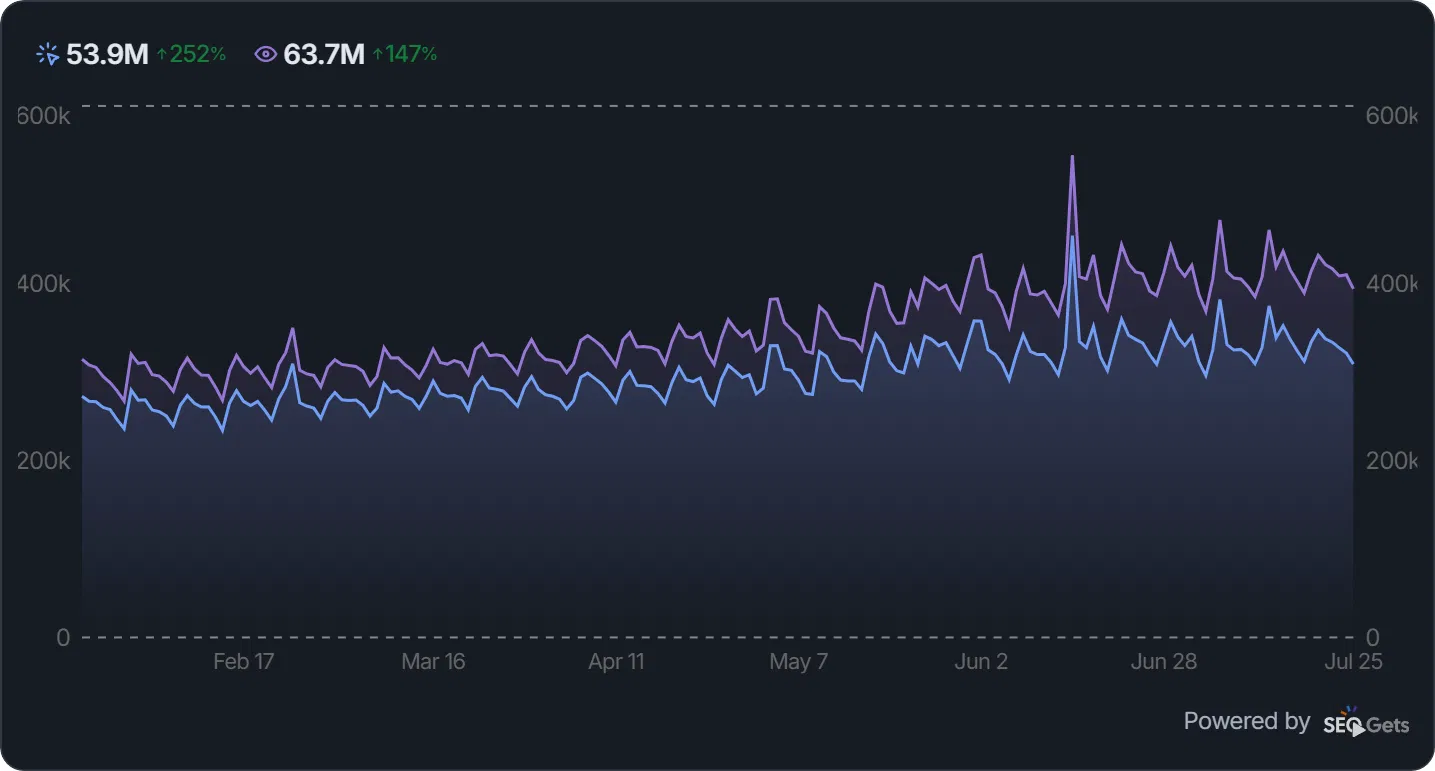
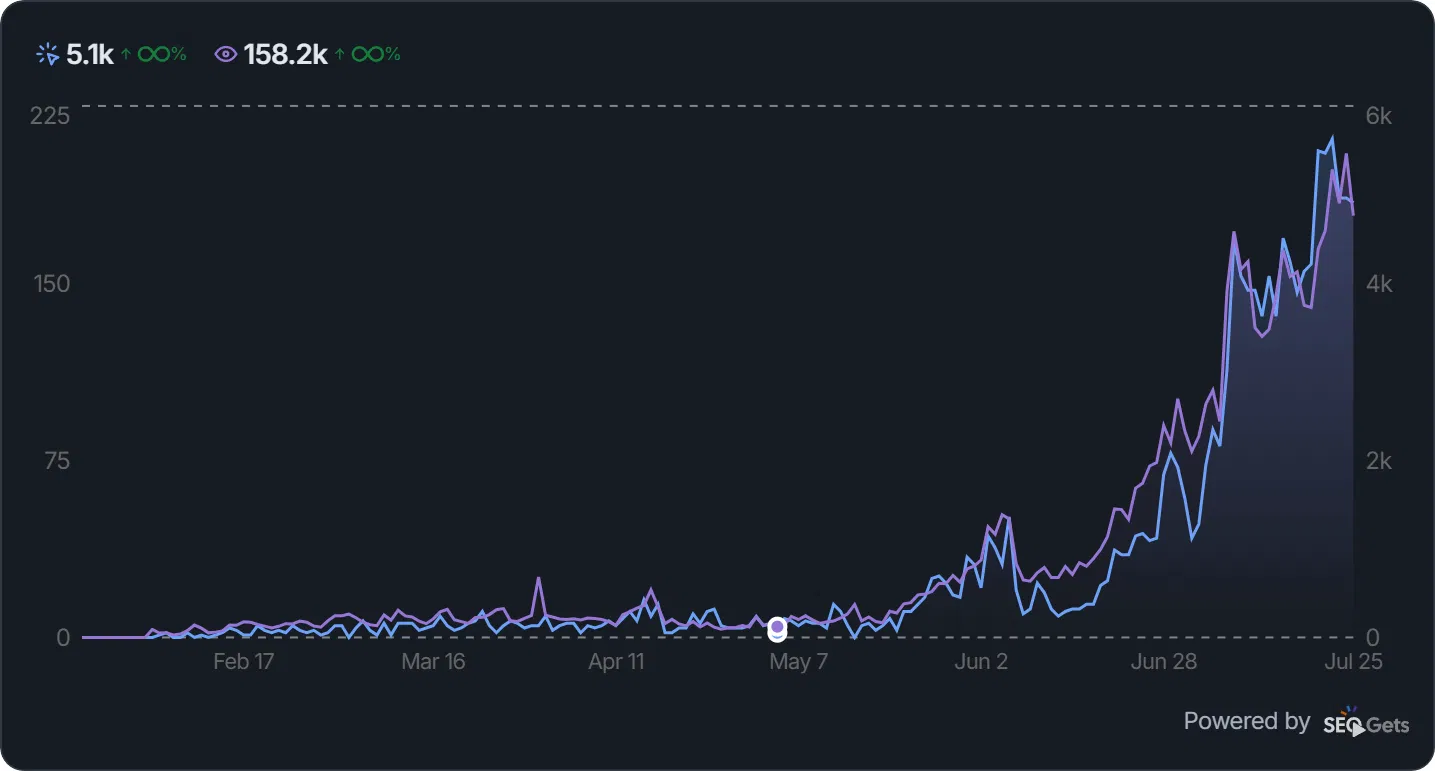
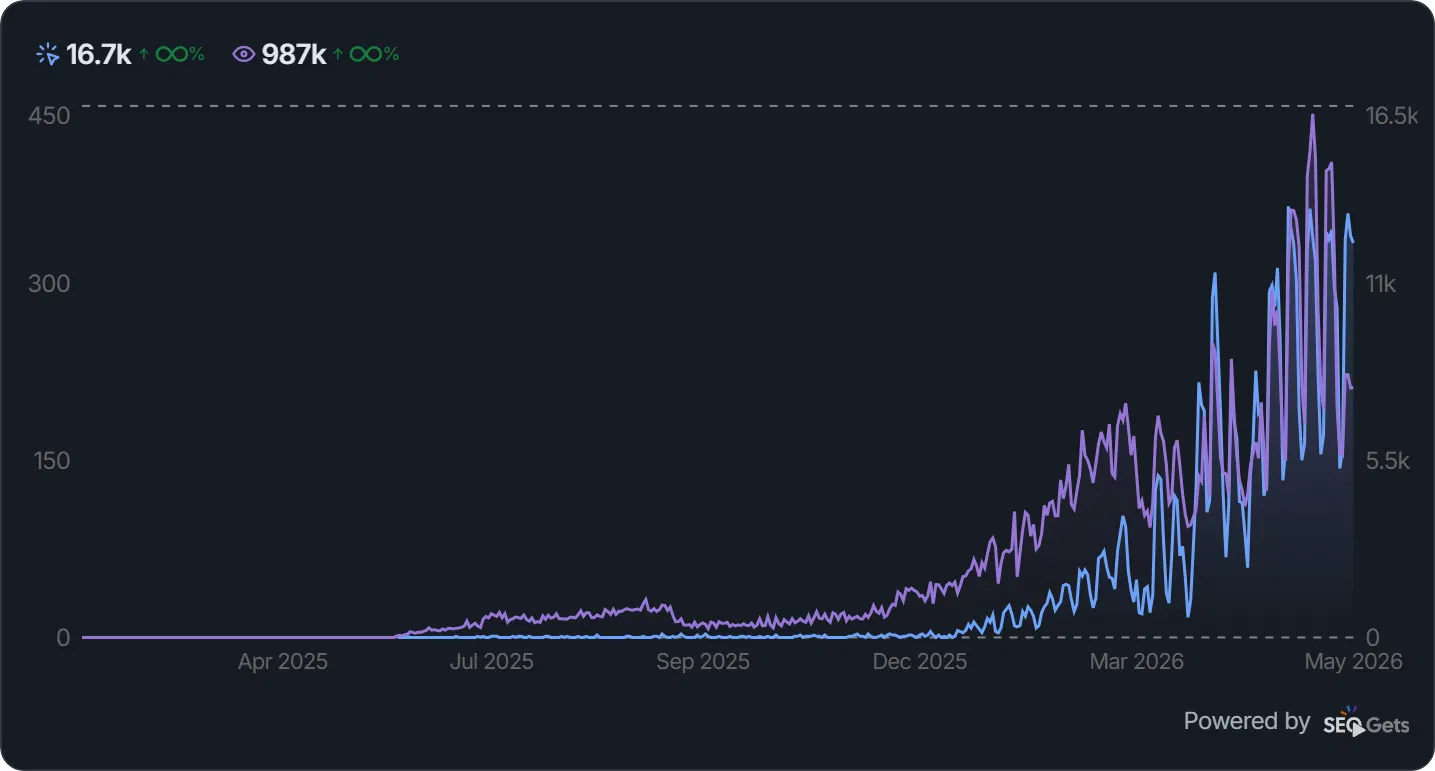
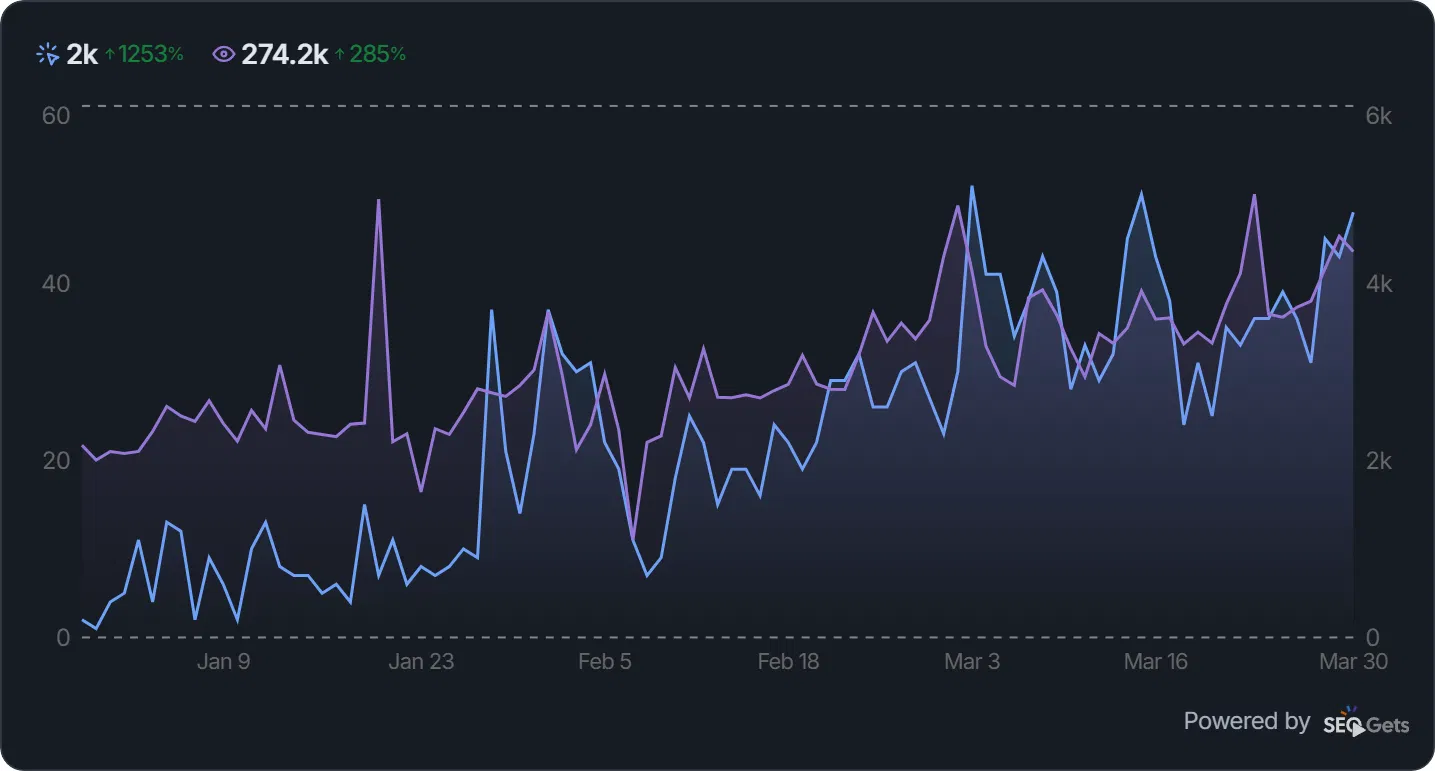
That continuous measurement is what lets us put our guarantee in writing: 20% growth in ranking keywords, 20% growth in Search Console clicks and 20% more new customers in the month following the 90 days, or we keep working without billing. In three years, we have had to honour it once. Our methods are tested first on the web properties we operate ourselves, where we ran our study of 200 ranking factors, and our case studies include a store that went from invisible to global in twelve months, from under 10 clicks a month to more than 300 a day, with Search Console screenshots to back it up. Your starting point gets measured with a free SEO audit.
Worth remembering: categories aligned with buying queries, unique product pages, facets under control, complete structured data. That is how a store wins the first page, and every gain reads in the sales.
FAQ on ecommerce SEO
How long before ecommerce SEO shows results?
The first movements usually appear within 30 to 90 days: rankings, impressions, first organic sales. The most contested buying queries take six to twelve months of continuous work, and the long tail of product pages almost always moves first.
How much does an ecommerce SEO agency cost?
Our ranges are published: most online stores land between $2,500 and $5,000 CAD per month, and catalogues aiming at a national market or sustained content production between $5,000 and $12,000 CAD per month. The size of the catalogue, the strength of the stores already ranking and the volume of content to produce decide where you land. Reach us through the contact page and you will get an answer within 24 hours, with a measured picture of your market.
What is the difference between SEO and paid advertising for an online store?
Google Ads delivers immediate traffic, billed per click, that stops with the budget. Search engine optimization builds more slowly, then generates sales with no auction cost, year after year. The two combine well: advertising tests which queries convert, and SEO wins them for the long term.
Why go through an agency rather than run my store's SEO in house?
Search work on a catalogue draws on a mix of skills that rarely sit in one team: technical, writing, structured data, link building, analysis. A specialized agency applies methods proven across dozens of stores while your team stays on the products and the operations.
Does ecommerce SEO work on every platform?
Yes. Shopify, WooCommerce, Magento, BigCommerce and custom architectures each expose their own settings: how collections, canonical tags, redirects and markup are handled. The strategy adapts to the platform, and the principles stay the same.
Should you rewrite the descriptions supplied by the manufacturer?
Yes, starting with the pages that carry the most revenue potential. A unique description, aligned with the words your buyers type, sets your page apart from the dozens of stores publishing the same text.
How do you handle out-of-stock or discontinued products?
A temporary stockout keeps its page, with the return date and alternative products. A discontinued product gets redirected to its successor or its category, so the accumulated authority passes on instead of being lost in a 404 error.
What are AEO and GEO, and do they matter for my store?
AEO structures your content so Google picks it as a direct answer, and GEO works on your presence in the answers from ChatGPT, Perplexity and AI Overviews, which cite their sources. A well-structured store with complete product data starts ahead in both cases.