Technical SEO is the foundation of search engine optimization. A site that search engines struggle to crawl stays invisible no matter how deep its content runs, and every blocker you clear releases value that was already sitting in your pages.
What is technical SEO?
Technical SEO covers the work that lets search engines crawl, index and understand a website: page speed, URLS structure, tags, the robots.txt file, the XML sitemap, structured data, HTTPS security. Together with on-page SEO, which aligns content with search intent, and off-page SEO, which builds domain authority, it forms the base of our SEO services. And unlike paid advertising, which stops the moment the budget does, a technical fix keeps producing organic traffic month after month.
| Pillar | What it covers | What it changes |
|---|
| Technical SEO | Crawling, indexing, speed, structure, security | Google reads your site with nothing in the way |
| On-page SEO | Content, tags, internal linking | Every page answers one search intent |
| Off-page SEO | Backlinks, authority, reputation | Your domain can hold its own in the SERP |
Why hand your technical SEO to an agency
A modern site accumulates layers: a CMS, plugins, tracking scripts, successive redesigns, migrations. Every layer can create errors that are invisible to the naked eye but very visible to crawlers: orphan pages, redirect chains, duplicate content, contradictory tags. A technical SEO agency finds these problems in the crawl, measures them against the sites ahead of you and fixes them in order of their effect on rankings, following every algorithm update along the way. The team we founded in Montréal applies its method here: a hypothesis, a test, a measurement, a decision. Local small business, online store, B2B company or SaaS: the machinery is the same, and only the priority jobs change.
The technical SEO audit, where the work starts
Every mandate opens on a full technical audit: a crawl of all your pages with Screaming Frog, cross-referenced with the data in your Search Console. The analysis covers:
- The 404 errors, the 301 and 302 redirects, and the chains that waste crawl budget
- The title tags, canonical tags and hreflang tags, and the heading hierarchy
- Indexing: the robots.txt file, the XML sitemap, excluded pages and orphan pages
- Page speed and Core Web Vitals, page by page
- Mobile usability and HTTPS security
- Duplicate content and tags that contradict each other
The audit produces a list of jobs ranked by impact, and that is where the work starts. Every fix is applied, validated in your own data, then monitored, because a living site produces new errors every week. Your starting point gets measured with a free SEO audit.
Crawling, indexing and site architecture
Google gives every site a crawl budget: the number of pages its crawlers go through on each pass. A site cluttered with redirects, 404 errors and pages nobody needs burns that budget for nothing while its strategic pages wait their turn.
Opening the door to crawlers
- Check the robots.txt file, so every strategic page stays reachable
- Submit a clean XML sitemap in Search Console
- Fix the 404 errors and flatten the redirect chains
- Set canonical tags wherever content repeats
An architecture that distributes authority
Site structure does the rest: readable URLSs, a logical hierarchy and internal linking that puts every important page three clicks or fewer from the home page. Schema.org structured data spells out the meaning of each page for the engines. Internal linking pays off fully when the pages are written against the SERP they target, which is the job of our SEO content team.
Speed, Core Web Vitals and the mobile experience
Google measures the loading experience your visitors actually get with the Core Web Vitals: LCP for rendering speed, INP for responsiveness, CLS for visual stability. Since the move to mobile-first indexing, the mobile version of your site is the reference for ranking, so a site that is painful on a phone ranks badly everywhere.
The optimizations that move these metrics, in order of return:
- A capable host, sized for your real traffic
- Compressed images served in modern formats
- A caching system and compression of the JavaScript and CSS files
- A CDN when your customer base spreads across several markets
- A lighter theme and lighter plugins, measured with PageSpeed Insights
A fast site holds its visitors, lowers the bounce rate and converts better. User experience has become a technical workstream, and it can be measured.
Technical SEO in the age of generative engines
ChatGPT, Perplexity, Gemini and Google's AI Overviews cite sources, and they choose the sites they manage to read. These generative engines crawl the web under the same constraints as Googlebot: a fast site, a clear structure, clean structured data and content reachable without a technical obstacle in the way. The technical groundwork therefore serves two campaigns at once: your positions in today's SERP and your citations in tomorrow's answers, a field our GEO team pushes further still.
Continuous monitoring, the way we work
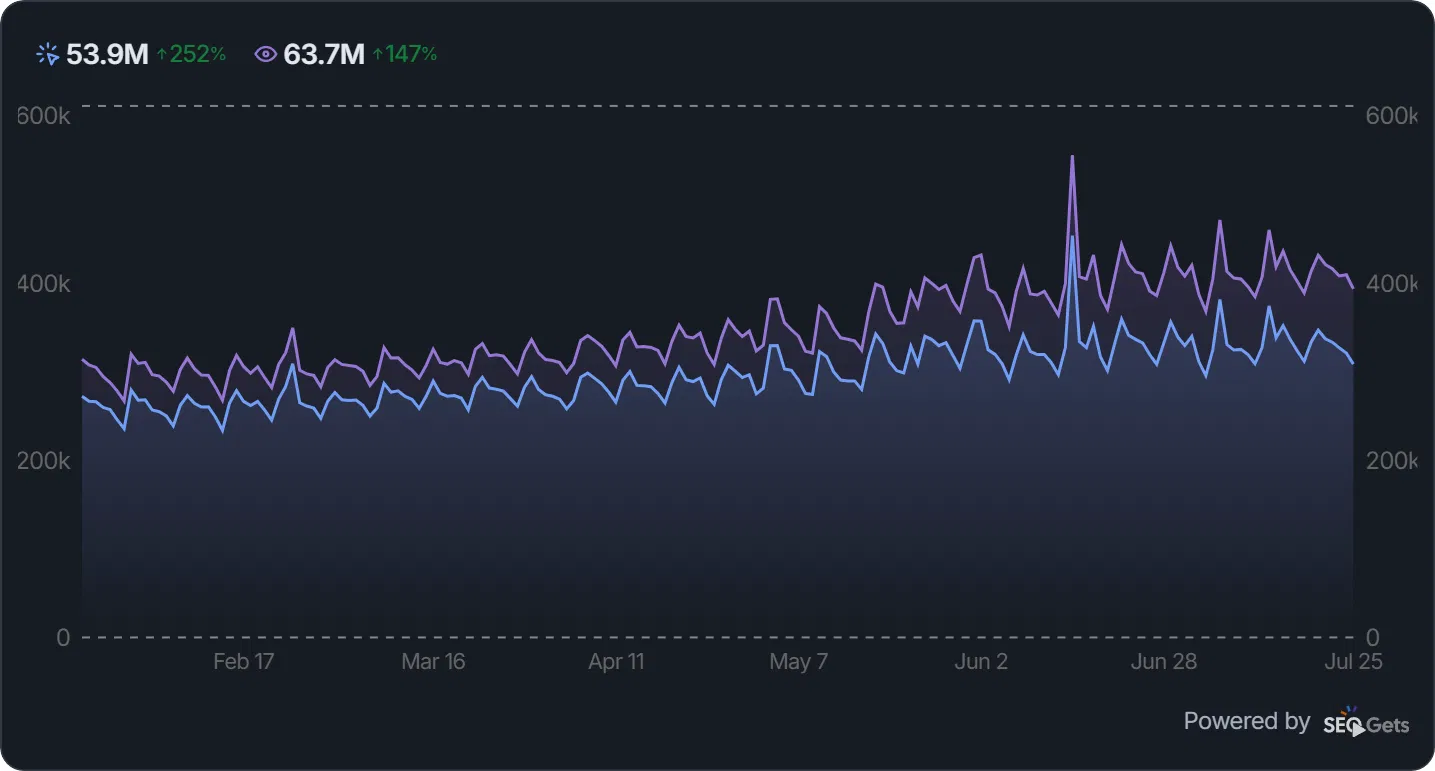
A website moves every week: a piece of content published, a plugin updated, a redesign, a migration. Any one of those can create an error that costs rankings, which is why technical health is monitored continuously, with the same instruments from one end of the mandate to the other: Google Search Console for clicks and indexing, Google Analytics for conversions, Semrush for positions, Screaming Frog for the crawl. Our methods are tested on the web properties we operate ourselves, where we ran our study of 200 ranking factors, and the tests we document feed the guides on the blog.
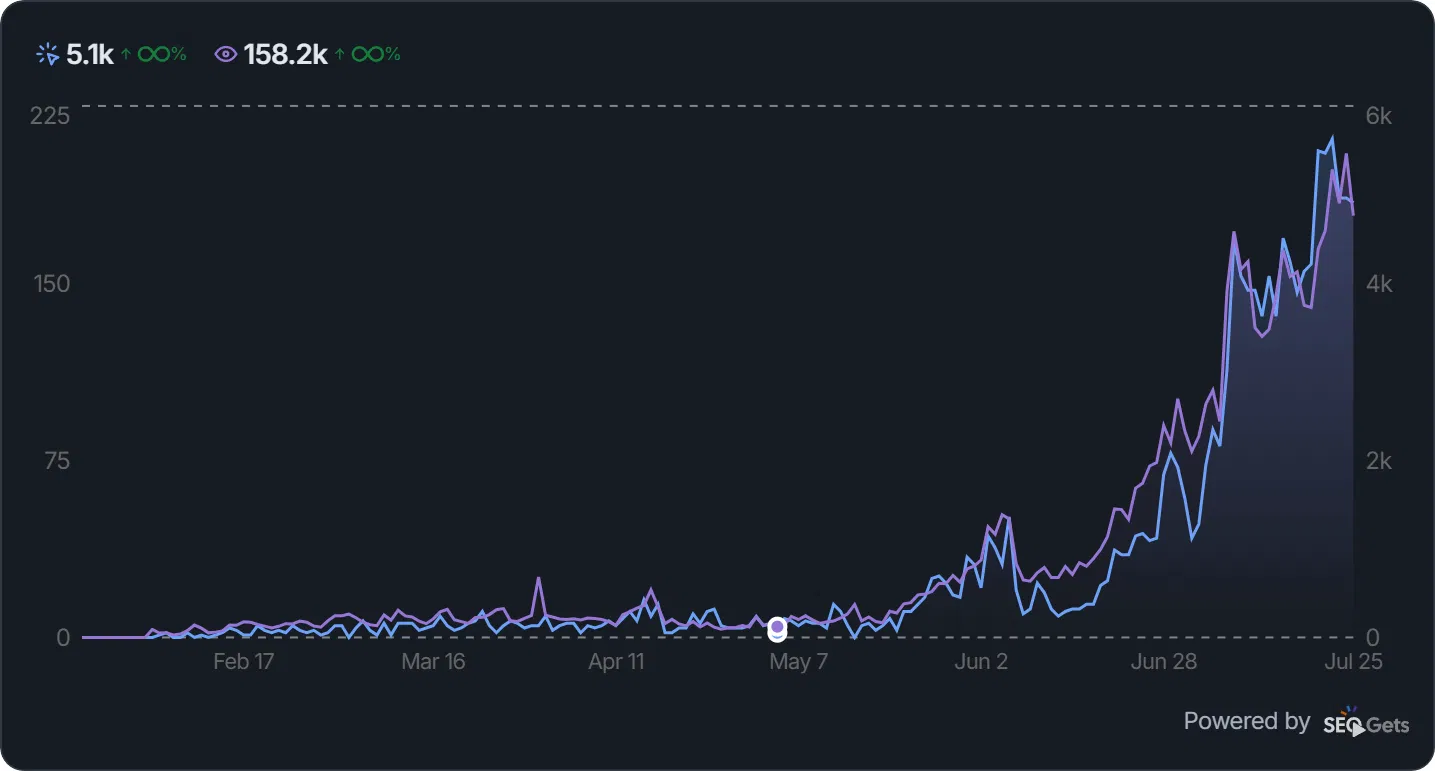
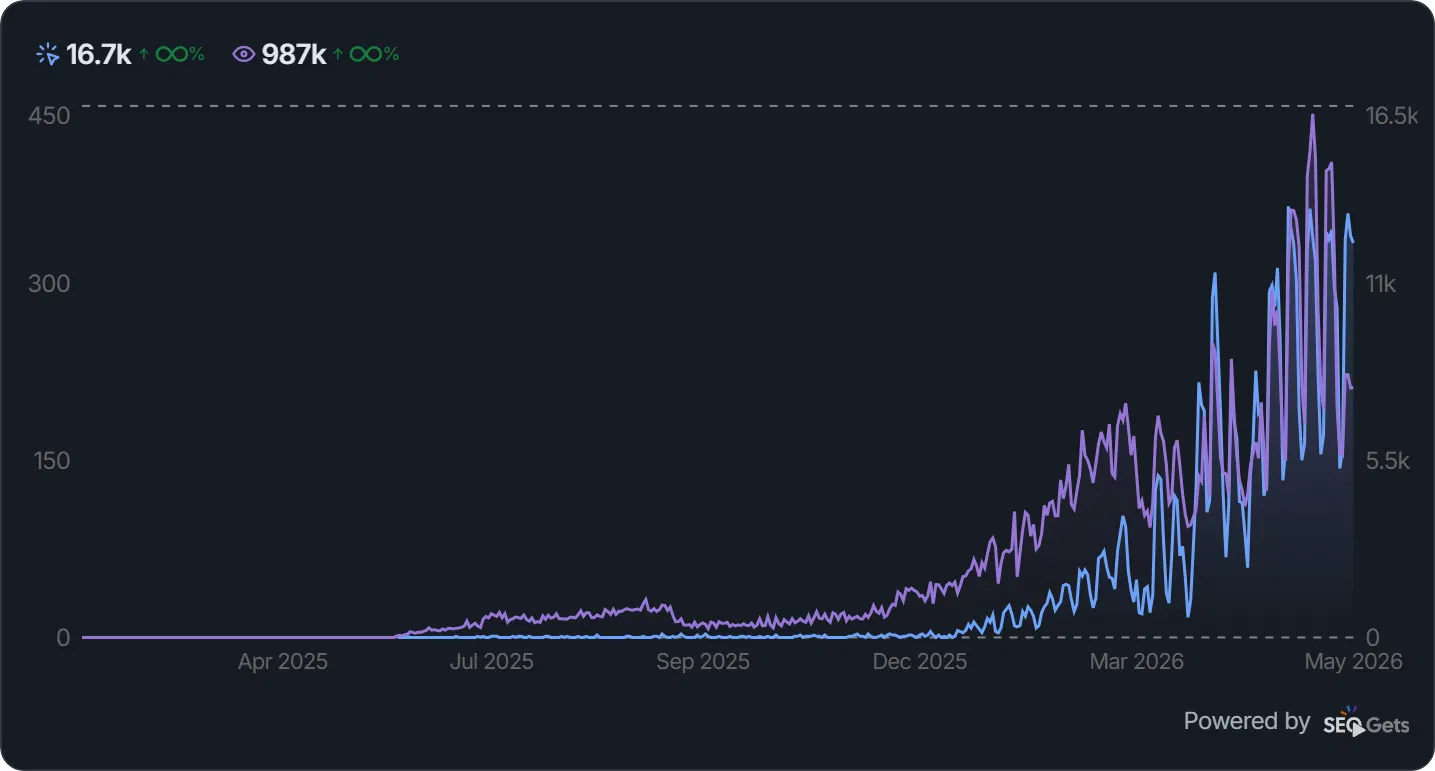
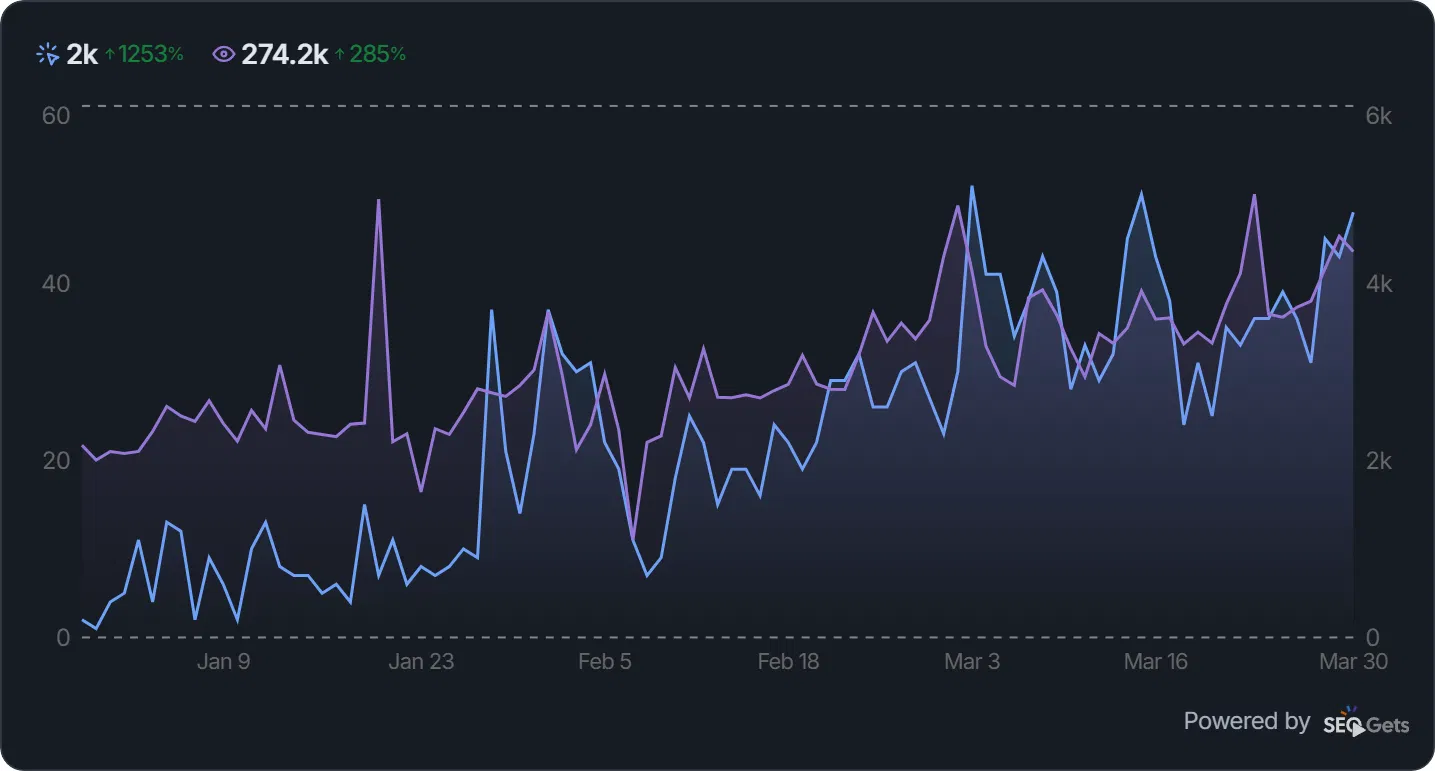
That continuous measurement is what lets us put our guarantee in writing: 20% growth in ranking keywords, 20% growth in Search Console clicks and 20% more new customers in the month following the 90 days, or we keep working without billing. In three years, we have had to honour it once. Our case studies include a site that went from invisible to global in twelve months, from under 10 clicks a month to more than 300 a day, with Search Console screenshots to back it up.
Worth remembering: open indexing, measured speed, clear structure, constant monitoring. That is how a technical foundation gets built, and every gain shows up in your Search Console.
How much does technical SEO cost in Québec?
The technical work sits inside a full search mandate, and our ranges are published:
- $1,500 to $2,500 CAD per month: local small business, single location, limited geographic market
- $2,500 to $5,000 CAD per month: multi-service or multi-city company, strong organic competition
- $5,000 to $12,000 CAD per month: ecommerce, SaaS or national market, with sustained content production
Three factors decide where you land: the technical state of your site at the start, the strength of the sites already holding your keywords, and the volume of content to produce. Reach us through the contact page and you will get an answer within 24 hours, with a measured picture of your site.
FAQ on technical SEO
What is the difference between technical SEO, on-page SEO and off-page SEO?
Technical SEO makes sure search engines can crawl, index and understand your site. On-page SEO optimizes the content and the tags of each page for one search intent, and off-page SEO builds domain authority through backlinks. All three work together, and the technical layer carries the other two.
What is a technical SEO audit and what does it measure?
It is the full analysis of a site's machinery: crawling, indexing, page speed, Core Web Vitals, tags, redirects, duplicate content, security. A broader website audit adds usability and conversion on top of that, while the technical audit stays focused on what crawlers see. In our mandates it opens the engagement and then continues as ongoing monitoring.
How does technical SEO improve my rankings?
By removing the obstacles that stop Google from reaching your pages and understanding them, since every blocker cleared brings into view content that already existed. Speed, mobile compatibility and security also weigh directly in the ranking algorithm.
What are the most common technical SEO problems?
A slow site, important pages blocked from indexing, duplicate content, broken links, redirect chains and a painful mobile version. Each one is found in the crawl and fixed in a specific order, measured by its impact on your rankings.
How often should a site's technical health be checked?
Continuously, because every publication, update or redesign can create new errors. That is why our mandates read Search Console every week, and the critical moments, meaning a redesign, a migration or a domain change, are prepared before they arrive.
Does technical SEO affect my visibility in ChatGPT and AI Overviews?
Yes. Generative engines crawl the web under the same constraints as Google's crawlers and cite the sites they can read easily. A clear structure, clean structured data and fast pages raise your odds of being cited as a source in their answers.
Do HTTPS and security affect search rankings?
Yes. HTTPS is a ranking signal Google has confirmed and a trust signal for your visitors. A valid SSL certificate, clean redirects from HTTP to HTTPS and resources served securely are part of the baseline checks in the audit.
Is user experience part of technical SEO?
Largely, yes. The Core Web Vitals measure the loading experience your visitors actually get, and Google folds them into its ranking. A site that is fast, stable and comfortable on mobile serves the algorithm and the customer at the same time.
Why hand technical SEO to an agency rather than an in-house team?
Because the diagnosis calls for specialized tools, constant monitoring of Google's updates and experience across dozens of comparable sites. A good agency delivers prioritized fixes, works with your developer when you have one, and proves every gain in your own data, which is the criterion that should guide your choice. When your team has the capacity to execute and what it is missing is direction, our SEO consultant fills that role.
How long before results show up?
Technical fixes are among the fastest wins in search. A page unblocked from indexing can appear in the index within a few days, and the first movements usually show up in Search Console within 30 to 90 days. The most contested queries take several months of continuous work.