A growing share of searches no longer ends in a click. ChatGPT, Perplexity, Gemini and Google's AI Overviews compose an answer, cite a handful of sources, and the user moves on. If your site is not among those sources, you are invisible to that share of the market, even from the first organic position.
What is GEO, or generative engine optimization?
GEO, short for generative engine optimization and also called AI search optimization, covers the work that gets a site cited inside answers generated by artificial intelligence. The target is no longer a position in the search results, but a citation in the answer itself: being the source the model keeps, names and links to.
A generative engine optimization agency therefore works three areas search engine optimization already covers, tuned differently: the technical layer, so generative engines can crawl and read your pages; the content layer, so your content is extractable and verifiable; and brand coverage, so your entities are recognized elsewhere on the web. It is the newest of our SEO services, and the one that moves fastest.
GEO, SEO and AEO: what separates them
The three disciplines share the same foundations and aim at different surfaces. None of them replaces the others.
| Discipline | What it targets | How performance is measured |
|---|
| SEO | Ranking in the organic results of Google and Bing | Positions, impressions, clicks in Search Console |
| GEO | Your brand being cited in the answers of generative engines | Citations, mentions, share of voice, referral traffic from AI tools |
| AEO | The direct answer: featured snippets and frequently asked questions | Winning rich results and question blocks |
A site without solid SEO foundations gives a large language model (LLM) very little reliable material to work with: indexing by search engines, content depth and topical authority all remain prerequisites. GEO adds a layer; it replaces nothing.
What a generative engine looks at before citing you
Models do not assess a page the way a human reader does. Six signals come up every time.
- Access: pages have to be crawlable without depending on heavy JavaScript rendering
- Structure: a logical heading hierarchy, short sections, lists and tables that split cleanly into extractable pieces
- Answer first: the useful information at the top of the section, not after three paragraphs of introduction
- Proof: verifiable factual data, sourced numbers, real experience rather than generalities
- Entities: a company name, a field of expertise and a set of services described consistently from one page to the next
- Repetition elsewhere: what other credible sites say about you, because a model cross-checks its sources
Worth remembering: a generative engine is not looking for the most optimized page; it is looking for the safest source to cite. That difference changes everything we write.
Making your site readable by language models
The technical side of GEO overlaps heavily with search engine optimization, with the priorities shifted. We check crawling and indexing, we reduce the dependency on JavaScript so the content exists in the served HTML, we put a clean heading structure in place, and we add the Schema.org structured data in JSON-LD that describes your organization, your services and your frequently asked questions. The robots.txt file is revised to allow the AI crawlers through, and an llms.txt file can list what deserves to be read first.
Speed and stability still count: a slow page is a page that gets crawled less often. That groundwork is the job of our technical SEO team, and everything else depends on it.
Writing content that AI picks up
Citable content answers before it explains. Every section opens with the answer, sentences stay factual and self-contained, lists and tables replace long flowing paragraphs, and an FAQ picks up the wording users actually type. Prompts have become longer and far more conversational than yesterday's keywords, so we write for the full search intent, not for a single phrase.
What separates a source a model keeps from one page among many is proprietary material: your data, your measurements, your real cases. A page that restates the consensus adds nothing a model does not already know. Producing those pages is the job of our SEO content team, and the guides on the blog serve as the testing ground for our own formats.
Brand coverage: being repeated elsewhere
A language model trusts what several sources corroborate. If your expertise is only asserted on your own site, it counts for less than a mention in a media outlet, an industry publication or an independent comparison. Brand coverage therefore means multiplying the reliable sources that describe your company the same way: same services, same field of expertise, same contact details.
This is where GEO meets our link building strategy: editorial links earned on real sites serve domain authority in the organic results and brand credibility in generated answers. One effort, two surfaces.
Measurement: citations, mentions and share of voice
Classic search dashboards cannot see this kind of visibility. So we measure it differently, by regularly running a set of prompts specific to your industry across the main generative engines and logging four indicators: mentions of your brand in the answers, citations that point to a specific page, your share of voice against the competitors cited in your place, and referral traffic coming from AI tools.
Those indicators are read alongside the usual instruments: Google Search Console for organic impressions and clicks, Google Analytics for conversions and referral sessions, Semrush for positions, Screaming Frog for the technical state of the pages. Generative engines evolve quickly, and monitoring their updates is part of the mandate. That continuous measurement is what lets us put our guarantee in writing: 20% growth in ranking keywords, 20% growth in Search Console clicks and 20% more new customers in the month following the 90 days, or we keep working without billing. In three years, we have had to honour it once.
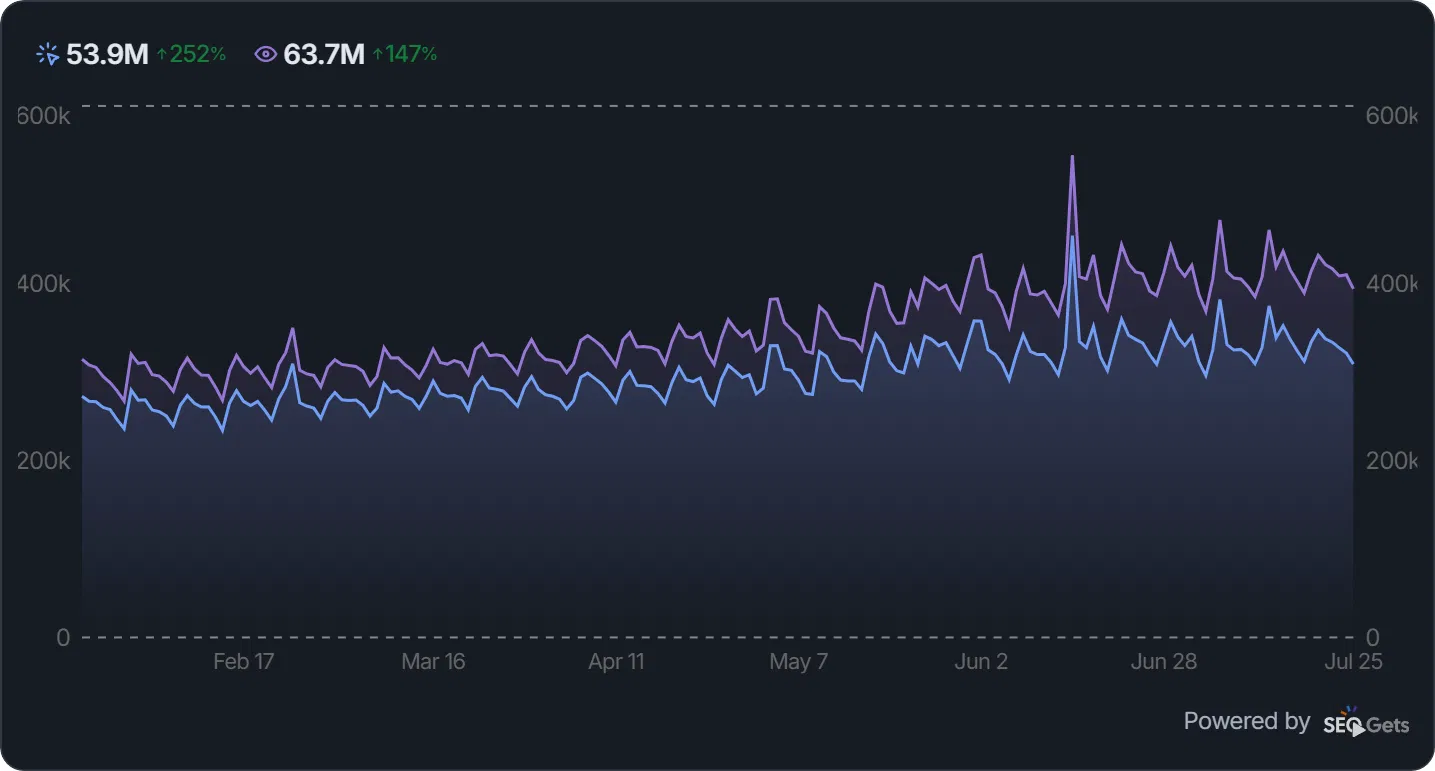
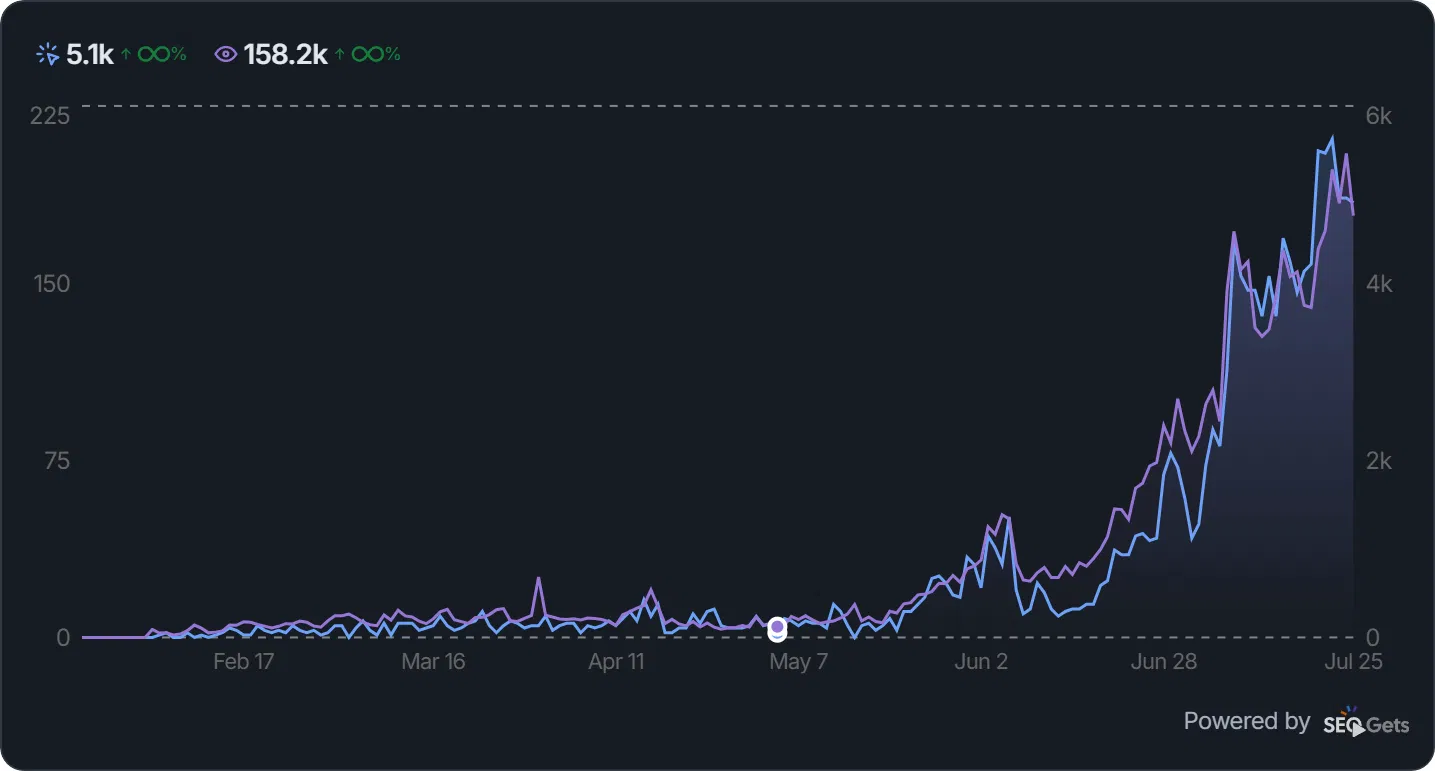
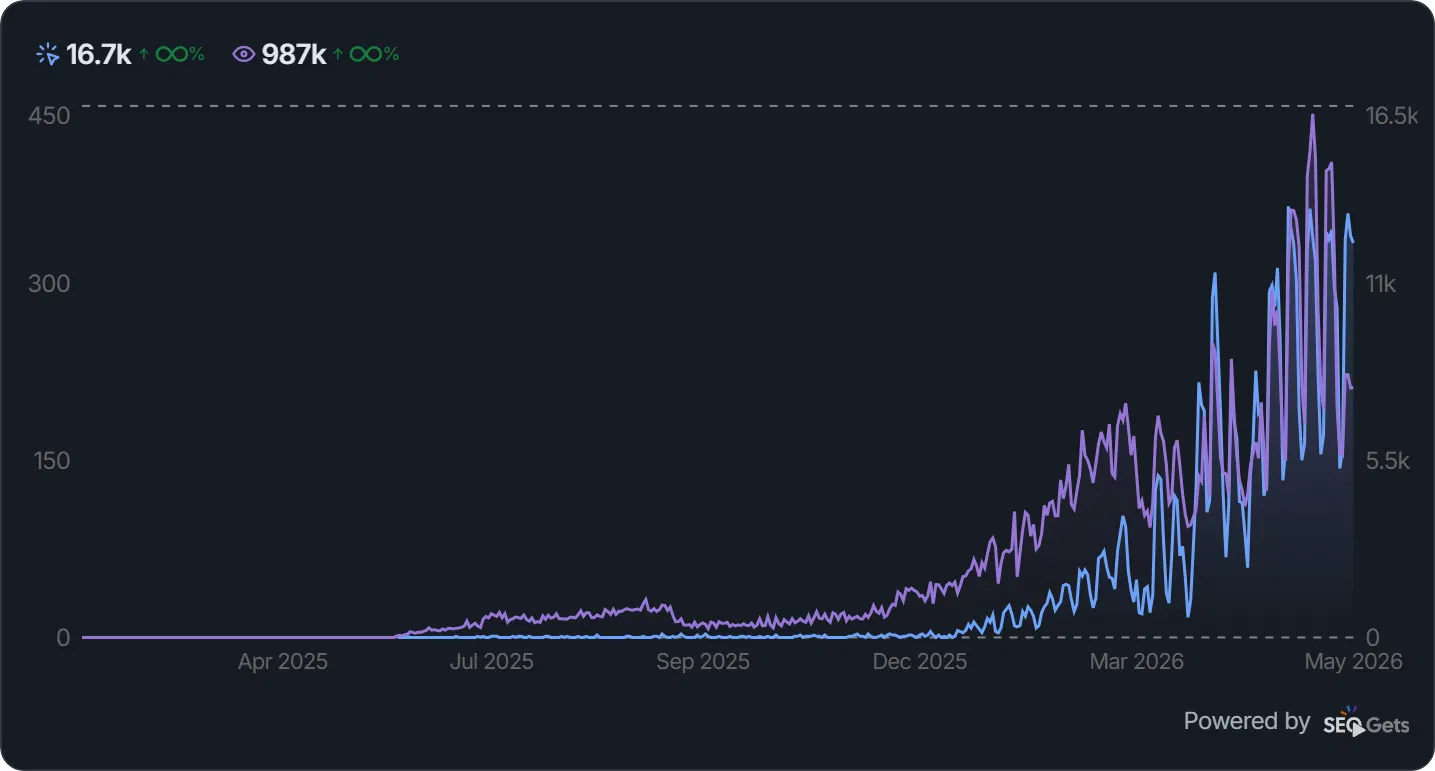
In a field as new as GEO, the rule of the team we founded in Montréal does not change: every method is tested on the web properties we operate ourselves, where we ran our study of 200 ranking factors, before it is applied to a client site. Our case studies show what this discipline produces over time, with Search Console screenshots to back it up.
GEO for businesses in Montréal and Québec
A GEO agency in Montréal works a bilingual market, where the same question asked in French and in English does not pull up the same cited sources. That is the first thing we test on a Québec mandate: the prompts go out in both languages, and the gap between the two source lists dictates where the effort goes first.
For small businesses and established companies alike, the logic stays the same: cover the questions your market asks, structure that coverage so it can be extracted cleanly, and get your expertise confirmed elsewhere. GEO rewards depth, which builds lasting visibility rather than a spike.
How much does a GEO agency cost in Québec?
GEO fits into our monthly mandates, because it shares its technical and editorial groundwork with search engine optimization. Our ranges are published:
- $1,500 to $2,500 CAD per month: local small business, single location, limited geographic market
- $2,500 to $5,000 CAD per month: multi-service or multi-city company, strong organic competition
- $5,000 to $12,000 CAD per month: ecommerce, SaaS or national market, with sustained content production
How much of that goes to GEO depends on three factors: the technical state of your site at the start, the number of prompts and intents to cover, and how present your brand already is in third-party sources. Reach us through the contact page: an answer within 24 hours, with a measured picture of your AI visibility and a free GEO audit to lock in the starting point.
FAQ on GEO and AI visibility
What is the difference between GEO and SEO?
SEO targets ranking in the search results and is measured in positions, impressions and clicks. GEO targets your brand being cited in answers generated by AI and is measured in citations, mentions and share of voice. Both rest on the same technical and editorial groundwork.
Is GEO going to replace SEO?
No. A generative engine draws on pages that have been crawled and indexed, so without solid search foundations it has very little reliable material to reuse. GEO adds a surface of visibility; it takes none away.
How do you become a source cited by ChatGPT or Perplexity?
By answering clearly from the first line of every section, backing your claims with verifiable data, structuring your pages with a logical heading hierarchy and structured data, and getting your expertise confirmed by other credible sources on the web.
Do you have to rewrite the whole site for GEO?
Rarely. We start with the pages that drive acquisition, meaning services, comparisons and frequently asked questions, then extend as citations start appearing. Many pages need nothing more than restructuring into direct answers.
What is the difference between an AI mention and an AI citation?
A mention names your brand in an answer without necessarily linking to a page; it builds awareness. A citation rests on a specific URLS and can generate referral traffic; it builds trust. The two are tracked separately.
Is GEO worth it for a small business?
Yes, and often more than for a large brand. Models keep the sources that cover a topic in depth, which a specialized small business does better than a generalist. In a niche market, a handful of serious pages is enough to become the cited reference.
How do I know if my site is ready for GEO?
A GEO audit answers in three parts: whether generative engines can reach your pages and read them, whether your content answers in an extractable format, and whether your brand is named elsewhere on the web. The initial audit is free.
What tools does a GEO agency use?
Tracking combines repeated prompt tests across the main generative engines with the usual search instruments: Google Search Console, Google Analytics, Semrush and Screaming Frog. No tool replaces reading the results against each other, which is where the real work sits.
How long before citations show up?
Technical fixes land within a few weeks, content restructuring is usually measurable between 30 and 90 days, and brand coverage takes several months. The pace depends on how often each model refreshes, which varies from one engine to the next.